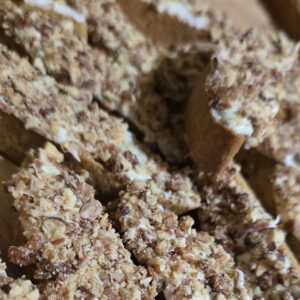

In a world obsessed with soft-baked, gooey, melt-in-your-mouth cookies, biscotti stand completely apart. They are unapologetically firm, satisfyingly crunchy, and designed for a completely different eating experience.
But what exactly gives this classic treat its distinctive character? It comes down to a mix of culinary science, tradition, and the unique way it brings flavors to life.
The Magic of the “Double Bake”
The most defining characteristic of biscotti is right there in the name—it literally translates to “twice-cooked.”
- The First Bake: The dough is formed into a long, slightly flattened log and baked until the structure sets and the outside is golden.
- The Second Bake: The warm log is pulled from the oven, sliced into diagonal strips, laid flat on the baking sheet, and baked a second time.
This second trip to the oven draws out almost all the moisture. While a standard cookie relies on butter and moisture for a chewy texture, a traditional biscotti embraces the dry heat. The result is a crisp, sturdy structure with an incredible shelf life that won’t crumble in your hands.
A Canvas for Gourmet Flavors
Because the base dough is relatively simple—traditionally just flour, sugar, and eggs—biscotti serve as the ultimate vehicle for high-end ingredients.
Unlike delicate pastries where heavy mix-ins can ruin the bake, biscotti dough is resilient. It can handle a generous load of additions, making it perfect for crafting a truly gourmet biscotti. Whether folded with toasted pistachios and dried tart cherries, infused with bright lemon zest, or half-dipped in premium dark chocolate, the sturdy structure holds complex, artisanal flavor profiles beautifully.
The Ritual of the Dunk
Perhaps the most unique aspect of biscotti is that they aren’t meant to be eaten in a vacuum. They are an interactive, pairing-focused food.
Their dense, dry crumb acts like a sponge, designed to be softened by a beverage. Dunking a biscotti into a hot cappuccino, a steaming mug of Earl Grey tea, or a traditional glass of sweet Italian wine completely transforms its texture. The hot liquid softens the outer layer, melting any chocolate or releasing the aromas of the nuts and spices, while the core maintains a satisfying snap.
Ultimately, enjoying a biscotti forces you to slow down. It’s an invitation to sit with your drink, savor the crunch, and enjoy a moment of warmth—a little slice of baked sunshine to brighten your morning or cap off your day.